
Children's Go Kart Buying Guide: Full Analysis of Safety and Suitability
⚡ When a child sits in a go-kart for the first time and steps on the accelerator, safety is not a bonus feature—it's the entry ticket.
Unlike ordinary toy cars, go-karts can reach speeds of 20-40 km/h, have a very low center of gravity, and no enclosed cockpit. In the event of a rollover or collision, lack of proper protection can lead to serious injury.
This article provides a no-nonsense buying and usage guide based on China Toy Safety Standard GB 6675, EU CE-EN 16855 (specific standard for go-karts), and real-world test data from consumer organizations in multiple regions.
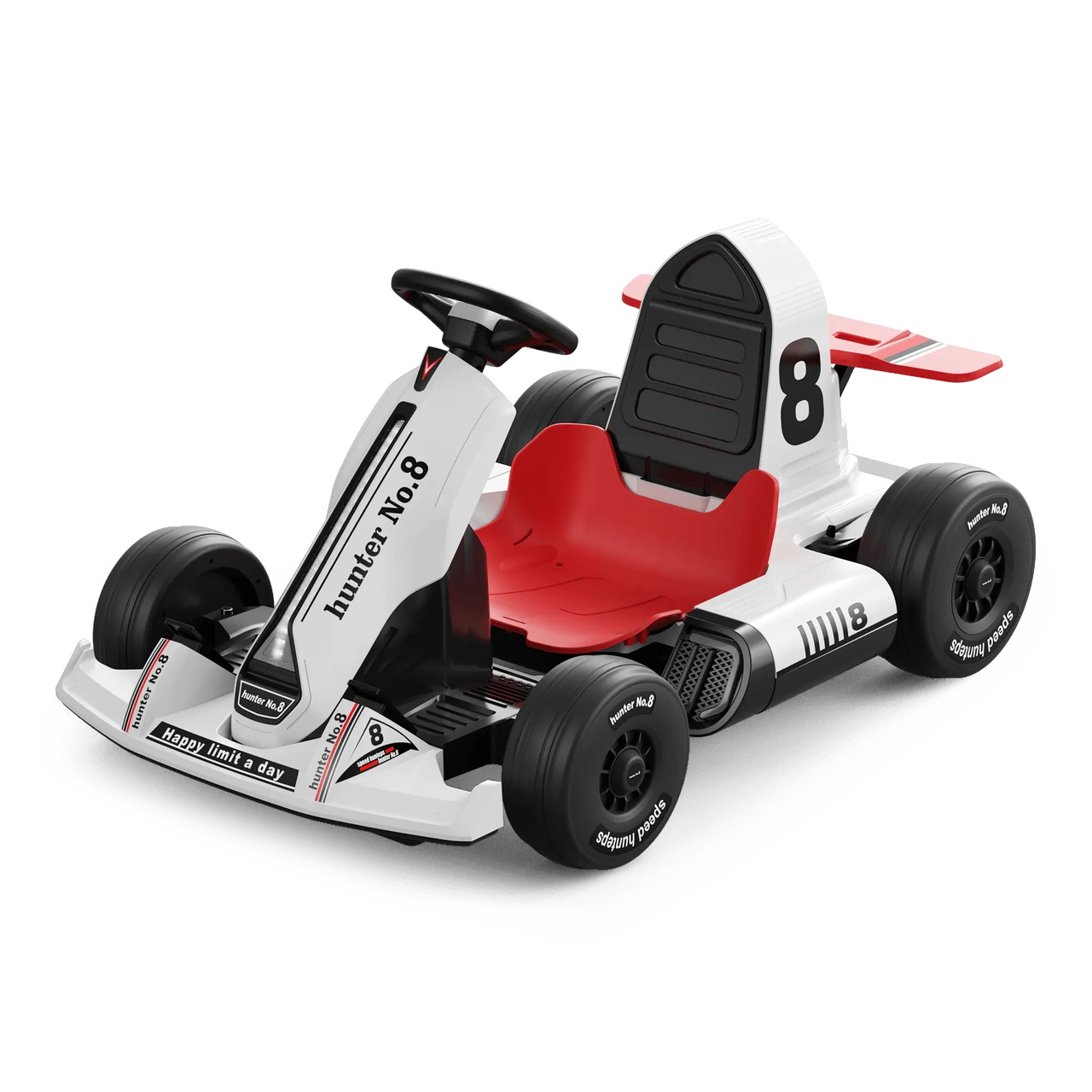
1. First, Know the Types: Not All Go-Karts Are the Same
Children's go-karts are divided into three types based on power and application scenarios. Choosing the wrong type is the biggest safety risk.
| Type | Power | Speed | Age Range | Typical Scenario |
|---|---|---|---|---|
| Non-powered/Pedal | Child's leg strength | 3-8 km/h | 3-6 years | Community flat roads, indoors |
| Low-speed Electric | 12V/24V battery motor | 8-18 km/h | 5-10 years | Community, park paved roads |
| High-performance Electric/Gasoline | 48V motor or 49cc two-stroke | 25-45 km/h | 10+ years | Professional tracks, closed venues |
⚠️ Core Principle: It is strictly forbidden to give a high-performance go-kart to a young child for use in open areas. These vehicles are designed for track-level protection (guardrails, buffer zones, professional helmets); ordinary community roads are completely unsuitable.
2. Safety Screening: Four Hard Criteria
2.1 Certification Marks (First Threshold)
Children's go-karts legally sold in the Chinese market must comply with at least one of the following standards:
✅ CCC (China Compulsory Certification): Applies to electric children's vehicles, based on GB 6675. Check for a clear CCC mark on the vehicle or packaging.
✅ CE-EN 16855: EU-specific standard for go-karts, covering structural strength, braking performance, rollover stability, etc.
✅ ASTM F1928 (USA): Applies to electric ride-on toys.
🔴 Pitfall Tip: Do not buy products on e-commerce platforms that claim to be "certified" but have no physical mark or verifiable certificate number.
2.2 Structural Safety: Rollover Prevention & Pinch Protection
| Safety Item | Check | Acceptable Standard / Common Issues |
|---|---|---|
| Tread/Wheelbase Ratio | ≥0.5 (wider tread prevents rollover better) | Narrow, long vehicles prone to tipping on sharp turns |
| Side Impact Bar | Rigid metal bar covering both sides | Cheap models use plastic decoration instead |
| 5-Point Harness | Secures both shoulders, waist, and crotch; adjustable | 2-point or loose straps can come loose in a rollover |
| Steering Wheel/Pedal Clearance | Child's knees should not hit the wheel; feet can fully depress pedals | Scaled-down adult versions restrict operation |
| Exposed Moving Parts | Chain/gear must have full enclosure | No guard can catch pants or fingers |
2.3 Braking System: Must Be Reliable and Easy to Operate
- Electric go-karts: Prefer models with electronic brake + mechanical handbrake dual design. A single electronic brake may fail when power is off or battery low.
- Test Method: Ask for a demonstration before purchase—brake from top speed on flat hard ground; stopping distance should not exceed 3 meters (at 15 km/h).
- Child's Operating Force: Brake pedal resistance should not be too high. Have a child of the same age sit and press the pedal to ensure they can press it fully with ease.
2.4 Speed Limiting & Parental Control
For vehicles intended for children under 8, the following must be present:
✅ Adjustable speed limiter: Parent can set maximum speed (usually low/medium/high).
✅ Remote power cutoff: Parent can emergency stop the vehicle within a 10 m range using a remote control.
🔴 Models lacking these two features are not recommended for unsupervised use by children under 7.
3. Suitability: Matching Age, Size, and Venue
3.1 Age and Power Reference Table
| Age | Max Speed | Motor/Displacement | Max Vehicle Weight |
|---|---|---|---|
| 3-5 years | ≤8 km/h | 12V/30W | 12 kg |
| 6-8 years | ≤15 km/h | 24V/100W | 20 kg |
| 9-12 years | ≤25 km/h | 48V/350W or 49cc | 35 kg |
| 12+ years | Track-specific | Unlimited (requires professional training) | — |
3.2 Cockpit Fit: Don't Overlook Ergonomics
Wrong posture is more dangerous than not wearing a helmet.
- Seat-to-pedal distance: When seated, the child's knees should be slightly bent (120°-140°), not fully extended or overly bent.
- Steering wheel height: There should be 3-5 cm clearance between the bottom of the steering wheel and the child's thighs to avoid knee impact during sharp turns.
- Harness height: Shoulder straps should cross the midpoint of the shoulder, not the neck or outer arm.
📌 Practical Advice: Take the child to a physical store or borrow a friend's kart to sit in for 5 minutes. Check for problems like "can't reach the pedals," "knees hitting the wheel," or "shoulder straps choking."
3.3 Venue Determines Model Choice
| Venue | Suitable Models | Prohibited Models |
|---|---|---|
| Community asphalt/cement (with pedestrians) | Low-speed electric (speed limited to 8-12 km/h) | Any gasoline kart, electric >20 km/h |
| Park square pavers | Pedal or low-speed electric | High-performance karts with hard tires (poor grip, prone to sliding) |
| Dedicated go-kart track | High-performance electric/gasoline | Low-end children's karts without rollover protection |
| Grass/sandy soil | Low-speed electric with big tires | Any low-chassis model (bottoming out) |
4. Brand & Product Recommendations (2025-2026 Real-World References)
Based on e-commerce sales, offline repair rates, and consumer reports, the following types have good safety reputations.
🏆 Entry-Level Safe Choice (Ages 3-7, ¥1000-2000)
✔️ Goodbaby GW162: CCC certified, with remote power-off and mechanical brake, three-speed limiter, weight only 11 kg. Note: Tires are relatively narrow, use caution on wet surfaces.
✔️ Berrijia 911S: Side impact bar is metal, 5-point harness buckle is smooth. Battery is removable for easy charging.
⚡ Performance Choice (Ages 8+, ¥3000+)
🔹 SaiTu ST-1 Children's Electric Version: Has 48V/350W motor, parental remote speed limiter, electronic + mechanical dual brakes. Meets CE-EN 16855. Cons: Heavy (42 kg), requires an SUV or pickup for transport.
🔹 Razor Crazy Cart XL: Has drifting capability, requires dedicated venue. Equipped with adjustable speed limiter and anti-tip wheels, but no CCC. Only recommended for private tracks.
Strict Avoidance: "Three No-Buy" Principles
- ❌ No unlicensed "internet-famous drift karts": Many modified models with slide plates have no standard testing and extremely high rollover risk.
- ❌ No plastic monocoque chassis karts: In a crash, the chassis can shatter and pierce the cockpit. Real cases have been reported.
- ❌ No second-hand karts with unknown history: Common hazards include battery aging causing sudden power loss, corroded brake cables, and loose bolts.
5. Safety Gear: Helmet Is the Minimum
Go-karts are non-road vehicles. In a collision, the head may first hit the steering wheel or side bar.
- Minimum Requirement: Wear a full-face or off-road motorcycle helmet certified to CCC or DOT (ordinary bicycle half-helmets provide no face protection).
- Strongly Recommended: Neck brace (prevents hyperextension), rib protector (prevents rib impact against seat sides during rollover).
- Absolutely Prohibited: No helmet, using roller skating helmets (not rated for multiple impacts), using damaged/repaired helmets.
🚨 Even for low-speed electric go-karts, the risk of facial impact with the ground during a rollover is high; a full-face or off-road helmet is essential.
6. Maintenance & Usage Cycle
- Pre-use check each time: Tire pressure, brake function, chain/drive cable slack, battery level (brake assist may weaken with low battery).
- Battery life: Lithium battery karts: about 300-500 cycles. When the full-charge driving range drops by more than 50% compared to new, replace the battery.
- Vehicle retirement: After a serious collision (frame deformation, wheel axle bending), do not repair and continue using—metal fatigue reduces structural strength.
✅ Conclusion: Safety First, Speed Second, Fun Third
The decision tree for choosing a children's go-kart is clear:
🧭 Confirm type matches age and venue → Check CCC/CE certification → Inspect rollover protection structure and 5-point harness → Test braking distance → Sit in to ensure no pinch or pressure → Must wear professional helmet → Quick pre-use check each time
Follow this process, and you buy more than just a vehicle—you buy a manageable risk management plan. A compliant, safely designed go-kart + strict usage rules + proper protective gear = a memorable childhood memory.
📚 Standards referenced: GB 667
Recommended products
-
XJD KIDS Go Kart V12
$159.99 $149.99
-
XJD KIDS Go Kart Rouge 24V
$219.99
-
XJD KIDS Go Kart 24V
$219.99